
When the Door Doesn’t Open, It May Not Be Your Door
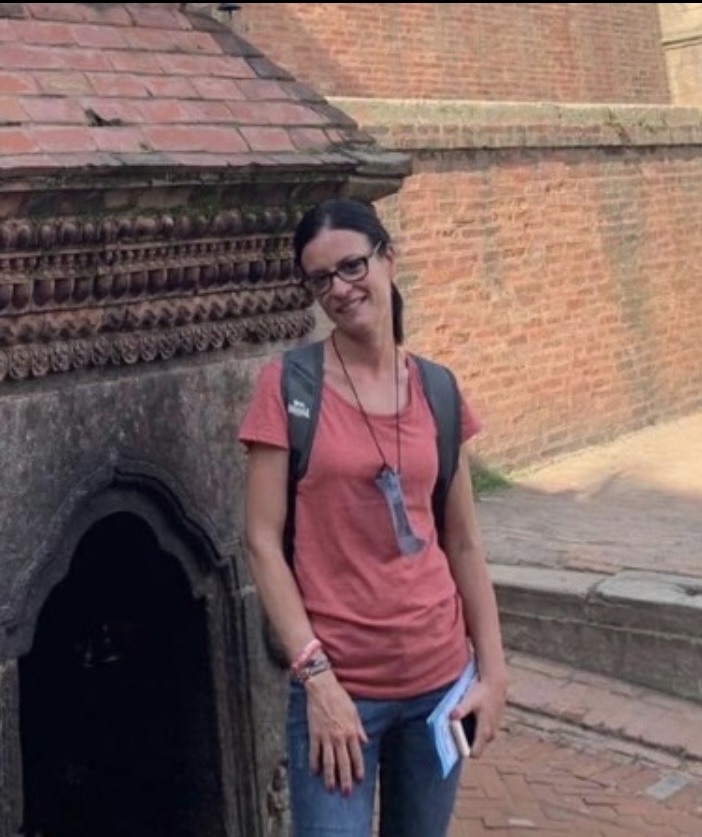

There are few things more frustrating than standing in front of a door you were certain was meant for you, only to find that it will not open. You knock. You wait. You try the handle. You convince yourself that perhaps you just need to be more patient, more impressive, more healed, more strategic, more spiritually aligned, or, depending on the day, simply less annoying to the universe. You look for signs. You replay what happened. You wonder whether you missed something, said the wrong thing, wanted it too much, or somehow failed the invisible test.
And beneath all of that, there is usually a quieter, more painful question: why not me?
Because a closed door is rarely just a closed door when we have attached hope to it. It can feel like rejection, delay, humiliation, loss, confusion, or proof that we have misread the path entirely. It can feel especially hard when the door looked so right from the outside. Perhaps it seemed to match the life you were trying to build. Perhaps it represented security, love, recognition, belonging, opportunity, freedom, or the next clear step. Perhaps you had already imagined yourself on the other side of it, rearranging your inner furniture around a future that had not yet arrived.
So when it does not open, it can feel personal.
And sometimes, in practical terms, it is personal. People make choices. Systems exclude. Relationships fail to meet us. Opportunities pass us by. Plans collapse. Life does not always close a door with a gentle, mystical whisper and a tasteful beam of golden light. Sometimes it slams the thing directly in your face while you are still holding the emotional equivalent of a welcome basket.
But even then, a closed door does not have to become a verdict on your worth.
This is where the old phrase, “if a door does not open, it is not your door,” can be helpful, but only if we handle it with care. Used badly, it can sound a little too neat, as though disappointment is something we should immediately package into wisdom before we have even had time to feel it. As though the correct response to loss is to smile serenely, adjust our imaginary robe, and announce that the universe clearly has something better planned. Lovely in theory. Deeply irritating when you are disappointed, exhausted, and trying not to spiral in the biscuit aisle.
But used gently, the phrase offers something much more useful. It does not ask you to pretend you did not want the door. It does not ask you to deny that it hurt when it stayed closed. It simply invites you to loosen the grip of one painful assumption: that because this door did not open, no door will.
A closed door may be many things. It may be bad timing. It may be misalignment. It may be someone else’s limitation. It may be protection you cannot yet recognise. It may be a sign that the path you are trying to force does not have enough room for the person you are becoming. It may be that what looked like an entrance was only ever a wall with very convincing lighting.
That does not mean you were foolish for wanting it. It means you are allowed to take the information seriously without turning it into self-punishment.
Because when a door does not open, the temptation is often to shrink ourselves in front of it. We start negotiating with the closedness. We wonder if we can make ourselves smaller, easier, more acceptable, less needy, less ambitious, less complicated, less fully ourselves. We begin to ask what version of us might have been chosen, welcomed, loved, approved of, or allowed through. And before long, the door has become more than an opportunity. It has become an altar, and we are offering pieces of ourselves to something that is not actually opening.
That is not alignment. That is self-abandonment with a nicer outfit.
In my earlier post, When the Wheel Turns: Alignment, Momentum and Co-Creating With Your Life Path, I explored the idea that life is not only something we push through by force, but something we learn to move with. There are seasons when energy gathers, momentum builds, and the next step begins to reveal itself through a mixture of choice, timing, effort, and trust. This piece sits with the other side of that same truth: sometimes alignment does not feel like movement. Sometimes it feels like being stopped.
And being stopped can be deeply uncomfortable.
It interrupts the story we were telling ourselves. It asks us to sit in the awkward space between what we hoped would happen and what is actually happening. It leaves us with all the feelings that forward motion can temporarily disguise. But sometimes, the pause is part of the guidance. Not because everything happens neatly or because disappointment is secretly delightful if you squint hard enough, but because a path that is truly yours should not require you to abandon yourself at the threshold.
If the door does not open, it may not be your door. Not because you are unworthy of entering, but because your life may be asking you to stop trying to belong where you are not being met. It may be asking you to lift your gaze from the one locked entrance and remember that the whole path has not disappeared. It may be asking you to trust, slowly and imperfectly, that what is meant for you will not require quite so much begging at the handle.
The Door You Wanted Is Not Always the Door That Belongs to You

There is a particular kind of ache that comes from realising something you wanted may not be yours to enter. Not because you did not care enough. Not because you did not try hard enough. Not because you failed to manifest it correctly, forgot to drink moon water, or accidentally annoyed the gods of timing with one suspiciously negative thought. Sometimes a door stays closed despite your effort, your longing, your preparation, and your genuine belief that it made sense.
That can be hard to accept, because we often confuse wanting something with being aligned with it. We assume that if the desire is strong enough, then the path must be right. We treat longing as evidence. We think, surely I would not want this so much if it was not meant for me. But desire is not always a map. Sometimes it is a teacher. It shows us what we value, what we are hungry for, what we are ready to move toward, or what still needs healing within us. It can point us somewhere important, but it does not always mean the exact thing we are reaching for is the thing that can hold us.
The job you wanted may have shown you that you are ready to be recognised, even if that particular role was not the right place for your growth. The relationship you hoped for may have revealed your capacity for love, even if that person could not meet you with the steadiness you needed. The opportunity that slipped away may have clarified what kind of life you are moving toward, even if it was never meant to be the doorway into it. The dream may still matter, even when its first visible form does not become yours.
This is where rejection can become complicated, because it rarely arrives with full context. It does not hand you a neat explanation in a velvet envelope. It does not say, do not worry, beloved human, this was misaligned for seven reasons you will understand in March. Usually, it just leaves you with silence, uncertainty, or an answer you did not want. And in that gap, the mind gets creative. It starts filling in the blanks with all the worst possible interpretations. I was not good enough. I missed my chance. I have fallen behind. Everyone else is moving forward. I should have done more. I should have been different.
But a door can fail to open for reasons that have very little to do with your worth. It may not be built for you. It may not have space for you. It may belong to an old version of your life. It may lead somewhere too small, too unstable, too conditional, too performative, or too far away from the deeper shape of what you need. It may look like progress from the outside while quietly requiring a version of yourself you have spent years trying to outgrow.
That is the part we do not always see when we are pressed up against it.
From the threshold, a closed door can look like the whole future. It can become enormous because it is the thing immediately in front of us. We stare at it so closely that we forget there may be other entrances, other routes, other rooms, other invitations forming beyond the edges of our current disappointment. Pain narrows vision. So does urgency. So does the feeling that this one thing must work because we have already poured so much hope into it.
But not every door deserves the authority we give it.
Sometimes the door we wanted was only appealing because it seemed to confirm something we needed to believe about ourselves: that we were chosen, lovable, successful, safe, seen, finally on track. When it stays closed, the real wound may not only be the lost opportunity, but the fear that we have lost that confirmation too. That is why closed doors can hurt so disproportionately. They press on deeper questions than the situation itself: am I still moving? Am I still worthy? Am I still allowed to hope?
And the answer is yes. Even here. Especially here.
A door not opening may change the route, but it does not erase the path. It may ask you to grieve a version of the future, but it does not mean there is no future left. It may bruise your pride, unsettle your certainty, and make you want to send several dramatic texts to the universe, but it does not get the final say over what is possible for you.
The deeper invitation is to stop treating the closed door as the judge of your life. Let it be information. Let it be disappointment. Let it be something you wanted that did not become yours. But do not let it become proof that nothing else will meet you. Sometimes what belongs to you is not found by forcing one entrance open, but by stepping back far enough to see that you were standing in the wrong corridor.
Closed Doors Can Still Hurt

Even when part of you suspects that a closed door may not have been your door, it can still hurt when it does not open. Knowing, or half-knowing, that something might not have been right for you does not magically remove the sting of not being chosen, invited, answered, accepted, loved, supported, or met. The heart is not a tidy filing cabinet. It does not simply sort disappointment into a folder called “Probably For The Best” and move on by lunchtime.
Sometimes we need to let the door be closed and still admit that we wanted it.
That can be strangely difficult. Once something does not work out, we often try to rewrite our longing. We tell ourselves it was probably silly anyway. We convince ourselves we did not care that much. We rush into interpretation before we have allowed ourselves to feel the loss. We make the disappointment smaller because feeling the full shape of it seems too exposing, too dramatic, or too close to admitting how much hope we had placed there.
But there is no shame in having wanted something. There is no shame in imagining a future. There is no shame in being disappointed when life does not move in the direction you hoped it would. Wanting is not weakness. Hope is not foolishness. The fact that something did not become yours does not mean you were wrong to desire whatever it seemed to represent.
A closed door may protect you from a path that could not hold you, but that does not mean the closing itself feels gentle. It may still bring grief. It may still unsettle your confidence. It may still make you question your judgement, your timing, your readiness, or whether you were naive to believe it could happen. This is why the “not your door” idea needs tenderness. Without tenderness, it can become another way of telling yourself to get over it quickly, to spiritualise the ache before you have properly listened to it.
And we are not doing emotional bypassing in a cute cardigan here.
Sometimes the honest thing is to say: I wanted this, and it hurts that it did not open. I can believe there may be another path and still feel sad about this one. I can trust that my life is not over and still need time to release the future I had started building in my mind. I can accept the answer without pretending it did not bruise something tender.
That kind of honesty matters because grief does not only belong to enormous losses. We also grieve imagined lives, missed chances, almosts, maybes, delayed beginnings, conversations that never happened, versions of ourselves we thought we were about to become. We grieve the little internal rearrangements we had already made in preparation for something new. We grieve the private hope that had nowhere to go once the door stayed shut.
Letting yourself feel that does not mean you are resisting the path. It means you are human enough to have cared.
The danger is not in feeling disappointed. The danger is in turning disappointment into identity. There is a difference between “this hurt” and “this means I am not wanted anywhere.” There is a difference between “this did not open” and “nothing ever will.” There is a difference between grieving a closed door and moving in permanently on its doorstep with a blanket, a flask, and a tragic playlist.
The invitation is not to deny the hurt, but to keep it from becoming the whole story. Let the ache have space, but do not let it take over the map. Let yourself mourn what you thought this door might mean, while remembering that meaning can appear in other forms. Let yourself feel the loss without making the loss into a prophecy.
Because sometimes the closed door is not asking you to harden. It is asking you to return to yourself. To gather back the pieces of your worth that you placed on the other side of it. To stop leaving your self-belief with people, places, opportunities, or outcomes that could not open to you. To remember that your value did not vanish because one route did.
This is not always quick work. It can take time to stop looking back. It can take time to stop replaying the moment the answer was no. It can take time to stop wondering whether you could have knocked differently, waited longer, tried harder, been easier to choose. But healing does not require you to arrive instantly at acceptance. Sometimes it begins with the quieter act of telling the truth without turning it into a punishment.
The door did not open. You wanted it to. It hurt.
And still, somewhere beyond this disappointment, there is more life.
Your Door May Be Somewhere Else

When one door refuses to open, it can be difficult to believe there are other doors at all. Disappointment has a way of shrinking the horizon. It pulls your attention toward the thing that did not happen, the person who did not choose you, the opportunity that did not arrive, the answer that did not come, until the whole landscape seems to close around one locked entrance.
But the closed door is not the whole path.
It is only one point on it. One possibility. One version of how things might have unfolded. One imagined future that did not become the future you are living. That does not make it meaningless, and it does not make the wanting irrelevant, but it does mean this moment is not as final as it may feel. The difficulty is that we often cannot see the next opening while we are still pressed against the one that stayed shut.
Sometimes life asks us to step back before we can see differently. Not because stepping back is easy, or because we are supposed to float away gracefully from disappointment like emotionally evolved woodland mist, but because distance gives us back perspective. When you are too close to the door, all you can see is the handle. You cannot see the corridor, the turn in the path, the window you had not noticed, the other entrance that may not look as dramatic but might actually lead somewhere far more liveable.
This is where trust becomes less about certainty and more about willingness. Not the certainty that something better is definitely waiting around the corner with excellent timing and a suspiciously cinematic soundtrack. But the willingness to accept that you do not yet know the whole shape of the story. The willingness to admit that the door you wanted may not be the only way forward. The willingness to loosen your grip just enough for life to show you another route.
And sometimes, the other route is not immediately glamorous. It may not arrive as a grand revelation. It may come through a smaller invitation, a quieter nudge, a conversation, a delay, a redirection, an unexpected interest, a slower beginning, or a path you might once have dismissed because you were so certain the original door was the one. Some doors do not shine from a distance. Some only reveal themselves when you are close enough, humble enough, or tired enough of begging at the wrong threshold to finally turn your head.
There is something tender about that. Because often, the door that belongs to you does not require the same level of self-erasure. It may still ask for courage, effort, patience, and growth, because sadly the universe does not seem to offer a premium membership where all meaningful paths are delivered fully assembled with snacks. But it does not ask you to abandon yourself as the entrance fee. It does not require you to become smaller, colder, quieter, less truthful, less alive, or less yourself in order to be allowed through.
A door that belongs to you may still challenge you, but it will not be built entirely out of begging.
That distinction matters. We can confuse struggle with significance. We can assume that because something is hard to get, it must be valuable. Because someone is hard to reach, they must be special. Because an opportunity is difficult to access, it must be the one that proves our worth. But difficulty alone is not destiny. A locked door is not automatically sacred because it has made you suffer in front of it.
Sometimes the most aligned path is not the one that makes you fight for every scrap of permission, but the one that meets your effort with movement. Not effortless ease, necessarily, but movement. A sense that what you are offering has somewhere to go. A sense that your energy is not disappearing into a wall. A sense that the path is not asking you to prove your right to exist before it will even let you begin.
This does not mean you should give up on everything that takes work. Some doors open slowly. Some require preparation, persistence, timing, or a few deeply unglamorous attempts at getting your life together. But there is a difference between a door that opens slowly and a door that remains closed no matter how much of yourself you sacrifice in front of it. There is a difference between patience and self-abandonment. There is a difference between commitment and clinging to something that keeps showing you it cannot receive you.
Your door may be somewhere else, and that does not make your effort wasted. The knocking taught you something. The wanting revealed something. The disappointment clarified something. Perhaps it showed you what you are ready for, what you will no longer chase, what kind of welcome you need, or what kind of life you are no longer willing to contort yourself to enter.
And perhaps that is part of the movement too.
Not every redirection feels like a blessing when it arrives. Some feel rude, inconvenient, badly timed, and frankly lacking in customer service. But over time, a closed door can become part of how you learn to recognise the difference between what dazzles you and what actually belongs to you. Between what asks for your effort and what feeds on your self-doubt. Between what you want because it is aligned and what you want because it promises to prove something you were never required to prove.
So if the door has not opened, let yourself step back. Let yourself breathe. Let yourself grieve, if you need to. But do not hand your entire future to a locked threshold. Somewhere else, there may be a door you have not yet noticed. A door with your name not shouted across it, perhaps, but quietly held within it. A door that does not need you to beg, shrink, perform, or become someone else before it lets you through.
And when you find it, you may realise it was never asking you to force your way in.
It was waiting for you to arrive as yourself.
Stop Begging at the Wrong Door

There comes a point when the most healing thing you can do is stop asking a closed door to explain your worth to you. Not because the wanting was wrong. Not because the disappointment was silly. Not because you should have moved on faster, known better, or floated gracefully into detachment with the calm expression of someone who has never once checked their phone for a reply. But because your life is too precious to spend indefinitely waiting at a threshold that keeps refusing to meet you.
This is often the hardest part. Not the first moment of disappointment, but the slow recognition that continuing to knock may no longer be hope. It may be habit. It may be fear. It may be the part of you that still believes, somewhere deep down, that if this door opens, then you will finally have proof that you were enough all along.
But no door should be given that much power.
No job, relationship, opportunity, invitation, approval, outcome, or version of the future should become the place where your worth is being held hostage. When something matters to us, it is natural to invest meaning in it. It is human to hope. It is human to want to be chosen. But if the door staying closed begins to make you question the whole of who you are, then the work is no longer only about the door. It is about gathering yourself back from it.
That gathering can be quiet. It does not have to involve a dramatic exit, a symbolic bonfire, or a perfectly worded declaration of closure, although I will never disrespect a well-timed symbolic bonfire. Sometimes it begins much more simply. You stop checking. You stop auditioning. You stop bending yourself around an answer that has already been given. You stop treating silence as a puzzle you must solve with enough self-criticism. You stop making your life smaller while you wait for something that has not shown it can open to you.
And slowly, something returns.
Your attention returns. Your energy returns. Your dignity returns. The part of you that was fixed on one locked entrance begins to notice the wider path again. At first, that path may not look especially inspiring. It may look uncertain, inconvenient, or irritatingly blank. There may be no glowing sign, no immediate replacement, no beautiful proof that everything has worked out exactly as it should. But even the blankness can be kinder than the old waiting. Even the uncertainty can be more alive than staying loyal to a door that keeps asking you to disappear in front of it.
This is the deeper wisdom beneath the phrase: if the door does not open, it may not be your door. It is not a command to instantly feel fine. It is not a demand that you convert disappointment into spiritual wisdom before you have even had a proper sulk. It is a reminder that what is meant for you should have some capacity to meet you. It should not require endless self-erasure as proof of your commitment. It should not ask you to keep knocking until your knuckles bleed while calling that persistence faith.
Sometimes faith is not knocking harder.
Sometimes faith is turning around.
Not in bitterness, though bitterness may visit, make itself a cup of tea, and have opinions for a while. Not in defeat, though it may feel like defeat at first. But in trust that your life is not contained inside this one refusal. In trust that the part of you that wanted this was reaching toward something real, even if this particular form could not hold it. In trust that there are other ways for love, purpose, security, recognition, belonging, creativity, or freedom to find you.
A closed door can teach you what you are no longer willing to do for entry. It can teach you the difference between patience and waiting where there is no welcome. It can teach you that longing does not need to become self-abandonment. It can teach you that alignment is not only about what opens, but also about what you are brave enough to stop forcing.
So let the door be closed, if it is closed. Let it be disappointing. Let it be something you wanted. Let it be something you may need time to release. But do not build a home on its doorstep. Do not mistake refusal for prophecy. Do not let one locked entrance convince you that you are not meant to move.
There is still a path beneath you. There is still life ahead of you. There are still doors you have not reached yet, doors you have not imagined yet, doors that may only become visible once you stop staring at the one that would not open.
And perhaps, when you finally meet the door that is yours, it will not need to be forced. It may still ask for courage. It may still ask for readiness. It may still ask you to step forward with your whole heart in your hands. But it will not ask you to abandon yourself before you cross the threshold.
That is how you will know.
Ready to go deeper into healing and intentional growth through tarot? Explore The Healing Journey, our step-by-step guided experience for transformation.
Liked this piece? Follow me for more soulful tarot reflections, healing frameworks, and tools for intuitive growth. Or visit www.the-healing-tarot.com to explore our courses and offerings.
#tarot #life-path #spiritualgrowth #tarotcommunity #loveandlight #healingtarot #flow


This blog offers a calming and reflective approach, especially for readers interested in tarot, healing, and self-discovery. I like how such platforms often focus not only on predictions but also on emotional guidance, mindfulness, and personal growth. Tarot-related content can help readers reflect on their emotions, decisions, and life direction in a more thoughtful way. In today’s digital world, people explore many kinds of online platforms, including options like 99exch live, but blogs like this highlight the importance of inner balance and self-awareness. The tone feels peaceful and supportive, making the content easy to connect with even for beginners. Overall, it is an interesting and meaningful blog that encourages reflection, healing, and personal understanding.